
Children's orthodontics · 2 min read
When should a child first see an orthodontist?
A first check-up is recommended around age 7. Here's why, which signs to watch for, and what the visit is like.
Quick answer
Orthodontic associations such as the AAO recommend a first check-up around age 7. At that age baby and permanent teeth coexist, so growth or bite problems can be spotted early. That visit doesn't always mean starting treatment — often monitoring is enough.
Key takeaways
- A first orthodontic check-up is recommended around age 7.
- Checking early doesn't mean treating early — sometimes it's just monitoring.
- Habits like thumb-sucking or mouth breathing are worth an evaluation.
- Dentofacial orthopedics uses growth to your child's advantage when indicated.
Many parents think they need to wait until all permanent teeth are in before seeing an orthodontist. In fact, a first check-up is recommended around age 7. Orthodontic associations such as the American Association of Orthodontists (AAO) suggest it because growth or bite problems can be spotted early at that age.
Why around age 7?
At that age baby and permanent teeth usually coexist, and the jaws are still growing. That allows the orthodontist to:
- Check how permanent teeth are coming in and whether there's enough room.
- Evaluate the bite: whether upper and lower teeth fit together well.
- Identify habits that can affect development, such as thumb-sucking or mouth breathing.
Checking early doesn't mean treating early. In many cases the recommendation is to monitor and come back later.
Which signs mean you should book a consultation sooner?
If you notice any of these signs, there's no need to wait for a specific age:
- Very crowded, crooked or widely spaced teeth.
- Crossbite (upper teeth sitting inside the lower teeth).
- Upper teeth that stick out, or lower teeth in front of the upper ones.
- Frequent mouth breathing or snoring.
- Thumb-sucking or pacifier use beyond the early years.
- Losing baby teeth much earlier or later than usual.
What is dentofacial orthopedics and when is it used?
Dentofacial orthopedics aims to guide the development of the jaws and bite while a child grows, using appliances chosen according to the diagnosis. When indicated, it can simplify or complement later orthodontic treatment. Learn more on our children's orthodontics page.
| Stage | Goal |
|---|---|
| Early check-up (around age 7) | Spot issues early and decide whether to treat or monitor |
| Orthopedics (if indicated) | Guide jaw growth and the bite |
| Orthodontics in the teen years | Align permanent teeth with braces or aligners, case by case |
What is a child's first orthodontic visit like?
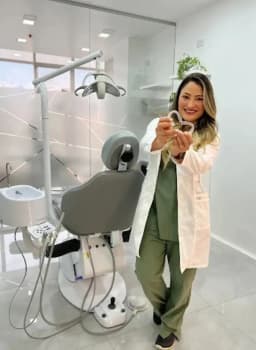
The first visit should feel calm. At Dr. Ana Pérez's practice in Bogotá we take time for your child to get to know the space, we check teeth, jaws, bite and habits, and we explain everything in simple words to both the child and the parents.
When should you see an orthodontist?
If your child is around 7 or you've noticed any of the signs above, a consultation will tell you whether to act now, wait, or simply monitor. You can book a consultation or browse our FAQ.
Frequently asked questions
Should my child wait until all permanent teeth are in?
Not for the first check-up. It's recommended before all permanent teeth come in precisely so the orthodontist can evaluate jaw growth and the bite. If treatment is needed, the orthodontist will explain the best time to start.
Does early treatment replace orthodontics in the teen years?
Not always. In some cases orthopedics or early treatment solves the problem; in others it simplifies later orthodontic treatment. It depends on the diagnosis, and the orthodontist explains it from the first visit so the family knows what to expect.
How do I prepare my child for the first visit?
Explain in simple words that the doctor will check how their teeth are growing and that it isn't a painful visit. Bring any relevant health information and write down questions about habits like thumb-sucking or mouth breathing so you can discuss them.
This article is for information only and does not replace a professional evaluation. Every case is different: Dr. Ana defines the right treatment after examining you.